I grew up as a pastor’s kid and a church secretary’s kid, in the Southern Baptist tradition, which meant I grew up inside the building, not just in the pews. And I grew up curious. I asked questions about the text almost as soon as I could read it myself, and for a while, that curiosity was celebrated. I was the "smartest kid in Sunday School." But as I got older, the same questions that once earned me praise started earning me suspicion, and eventually something closer to condemnation.
But here’s what I eventually found, buried in the very book I was told my questions were betraying: Thomas doubted, and Jesus met him in it rather than shaming him out of the room. Jeremiah doubted, loudly, to God’s face. Elijah doubted so deeply he sat under a tree and asked God to just let him die. And Jacob, he wrestled all night with God and refused to let go until he got a blessing out of it. God didn’t punish him for the fight. God renamed an entire nation after him. That’s the tradition I actually belong to, not the one that flinches at questions, but the one built by people brave enough to wrestle.
This class is my attempt to hand you that same permission. Over eight sessions, we’ll learn to read scripture the way scholars actually do, not defensively, not devotionally, but critically: distinguishing what the text describes from what it commands, learning historical and literary context, and picking up methods like feminist, liberationist, and queer theological criticism along the way. We’ll read the people history left out of the story back into it, women, the poor, queer people, and we’ll do it with real academic rigor, not just vibes.
You’ll walk away with actual tools you can use on any passage for the rest of your life, not a new set of beliefs handed to you secondhand.
What you’ll learn, practically, is how to hold a hard text without either weaponizing it or throwing it away, how to tell the difference between someone defending a belief and someone actually studying a text, and how to trust your own questions again, maybe for the first time since you were a kid who got in trouble for asking them.
I didn’t learn any of this by accident, and I haven’t only learned it in classrooms. I was named Honored Graduate in Religion in my undergraduate program and later awarded the Hyde Fellowship to study at Wake Forest University School of Divinity. But just as formative were the years I spent as a supervisor for the largest suicide crisis hotline in the nation, taking calls from people wrestling with their faith in the middle of their darkest moments, and learning firsthand that a non-judgmental, person-centered presence matters more than having the right answer ready. I bring that same posture here. I’m not here to talk you out of anything you believe. I’m here because I know, personally and academically, that the opposite of faith isn’t doubt. It’s certainty.
I’d love to wrestle alongside you for a while.
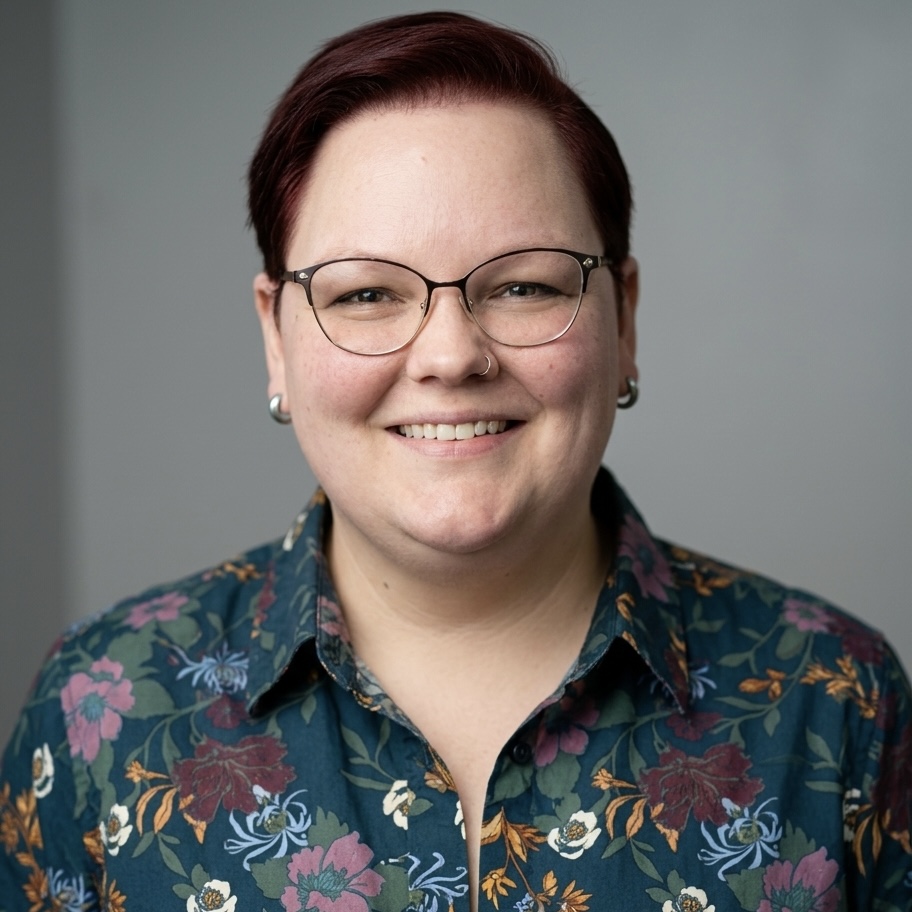
A year ago today, my grandfather passed away. He’d watched me my whole life, and near the end, he had a simple request: “Teach.” I’ve spent the year since honoring his wishes and my passion.I’ve held newborns shaking through withdrawal, held a dementia patient’s hand as she died, and listened to people speak their last words on a suicide crisis line. I’ve given peer support in mental health crisis and organized homes for adults with developmental disabilities. I’m a Jane of all trades in the helping professions, and for fun, I pick apart bad theology on major news networks and podcasts.I grew up wondering how a loving God could send His children to Hell. The questions never stopped after that. I’ve since built a faith I rarely explain, because I’m not here to win you over to it, but to help you learn to ask your own questions well.I’m a kind spirit with a fiery side, a deep love for the oppressed, and an unshakable devotion to Dolly Parton and Bob’s Burgers.